Healthcare LMS Implementation: How to Create Hospital Training Software
In the rapidly evolving healthcare landscape, continuous learning and professional development are critical for delivering high-quality patient care. A robust Healthcare Learning Management System (LMS) has emerged as a transformative solution for hospitals and healthcare organizations seeking to streamline training, ensure compliance, and enhance staff competencies. This comprehensive guide will walk you through everything you need to know about implementing an effective healthcare LMS.

1. What is LMS for Healthcare?
A Learning Management System for Healthcare (Healthcare LMS) is a specialized platform designed to deliver, track, and manage training programs for healthcare professionals. Unlike generic LMS platforms, a healthcare LMS is tailored to meet the unique needs of the healthcare industry, such as compliance training, clinical skills development, and patient safety education.
Healthcare training needs are unique compared to other industries. Doctors, nurses, and hospital staff require continuous education on medical advancements, patient safety protocols, and government regulations. An LMS helps streamline this process, ensuring that training materials are up-to-date and accessible to all employees.
For example, hospitals use LMS platforms to train new nurses on patient care protocols, while pharmaceutical companies leverage them to educate sales teams on new drug releases. Additionally, government healthcare agencies use LMS solutions to ensure employees comply with mandatory regulations and safety protocols. Training can also be extended to non-clinical staff, such as administrative teams and IT personnel, to ensure smooth hospital operations.
Healthcare LMS systems enable organizations to:
- Centralize training materials and resources.
- Automate course assignments and certifications.
- Track employee progress and performance.
- Ensure compliance with industry regulations like HIPAA, OSHA, and Joint Commission standards.
By leveraging a healthcare learning management system, organizations can streamline their training processes, reduce administrative burdens, and improve overall workforce competency.
2. How an LMS Can Address Healthcare Organizations’ Needs
Healthcare organizations face unique challenges, including high staff turnover, stringent regulatory requirements, and the need for continuous professional development. A healthcare LMS can address these challenges in the following ways:
Automating Compliance Training
Staying compliant with regulations like HIPAA (Health Insurance Portability and Accountability Act) and OSHA (Occupational Safety and Health Administration) is crucial in the healthcare industry. A healthcare learning management system ensures all employees complete required training modules, with automated reminders and certification tracking. This not only improves workforce compliance but also helps organizations avoid fines and legal complications.
Standardized Training
For large hospital networks, ensuring that all branches follow the same training protocols is essential. A centralized healthcare LMS system enables organizations to deliver uniform training, ensuring consistency in patient care standards. This is particularly valuable for organizations with multiple hospitals or remote clinics that need a standardized approach to workforce training.
Offering Flexible Learning Schedules
Medical professionals often work long and unpredictable hours. An LMS healthcare system provides on-demand training that allows staff to complete courses at their own pace, reducing disruptions to their schedules. E-learning modules can be designed for micro-learning, allowing employees to engage in short, impactful training sessions in between shifts.
Performance Tracking
With a healthcare LMS, administrators can track employee progress, identify knowledge gaps, and provide targeted interventions to improve performance.
Cost Efficiency
By transitioning to an online training platform, healthcare organizations can reduce costs associated with traditional training methods, such as travel, venue rentals, and printed materials.
Read more: How much does an LMS cost? Detailed LMS Setup Pricing for Business
3. Must-have Features of a Learning Management System for Healthcare
When selecting a healthcare LMS, it’s essential to choose a platform with features that align with your organization’s needs. Here are some must-have features:
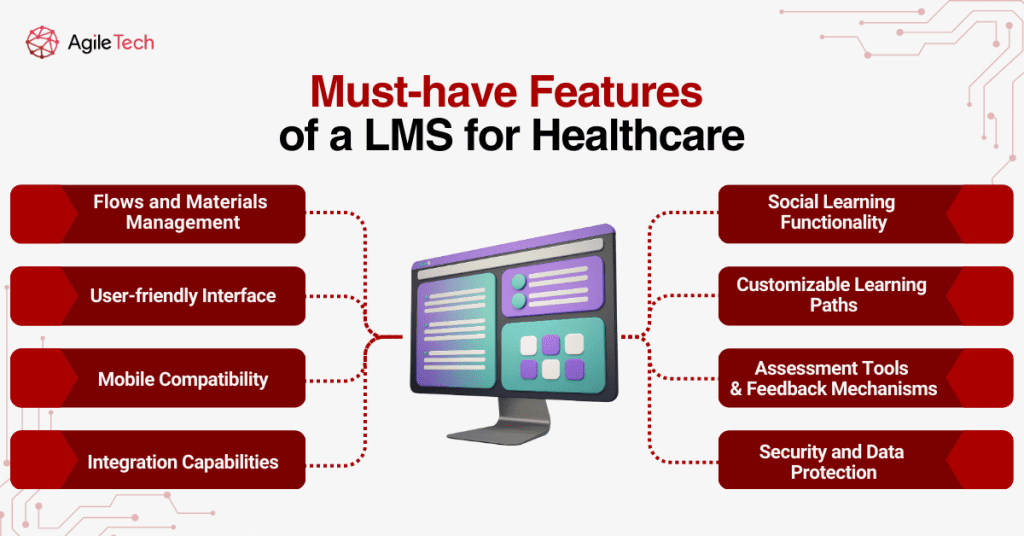
Flows and Materials Management
A robust LMS should allow organizations to structure and arrange learning materials based on current training needs. Learners should have 24/7 access to content from any device, ensuring flexibility in training schedules.
User-friendly Interface
A complex system can discourage users from engaging with training modules. A learning management system for healthcare should have an intuitive interface that makes it easy for both administrators and learners to navigate.
Mobile Compatibility
Given the fast-paced nature of healthcare, professionals need to access training on the go. A LMS healthcare system should be mobile-friendly, allowing staff to complete courses from smartphones and tablets.
Integration Capabilities
An ideal healthcare learning management system should integrate seamlessly with hospital management systems, electronic medical records (EMRs), and human resource software for a holistic training ecosystem.
Social Learning Functionality
Collaboration is essential in healthcare training. Features such as live chat, discussion forums, course sharing, and learner blogs create an interactive learning experience, improving engagement and knowledge retention.
Customizable Learning Paths
Different healthcare roles require different types of training. A healthcare LMS system should offer role-based learning paths tailored to doctors, nurses, administrative staff, and technicians.
Assessment Tools and Feedback Mechanisms
Evaluations like quizzes, exams, and scenario-based assessments help gauge employee understanding. A strong LMS for healthcare should also provide feedback features, such as peer reviews and AI-generated insights.
Security and Data Protection
A healthcare learning management system must comply with security regulations, such as HIPAA and GDPR, to protect sensitive employee and patient data. Secure data encryption and controlled access should be standard features.
Read more: What is eMAR in Healthcare: Definition and Core Functions
4. Key Advantages of Implementing a Healthcare LMS
Hospitals and medical institutions implementing LMS healthcare systems gain several benefits:
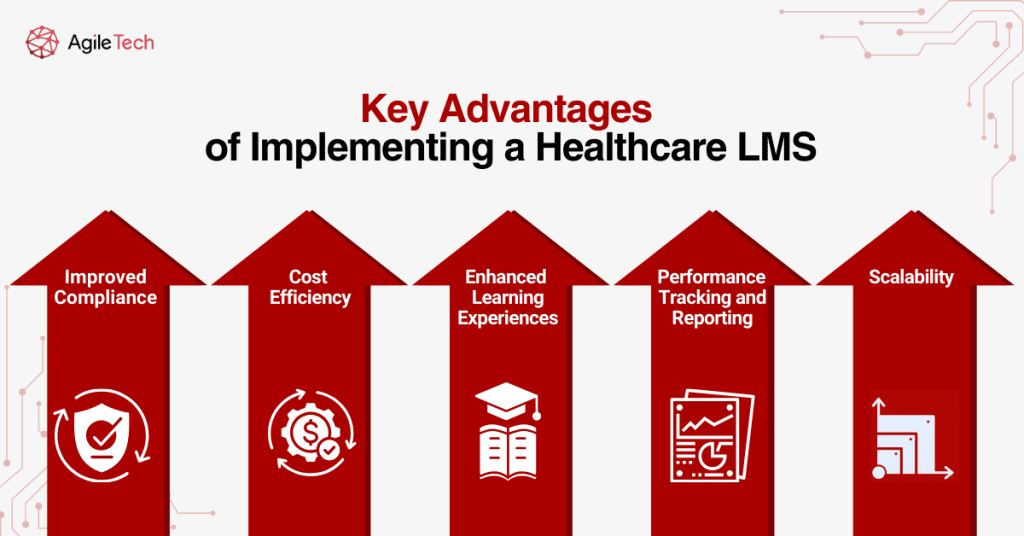
Improved Compliance
By automating regulatory training, a learning management system for healthcare helps hospitals stay compliant with legal and accreditation requirements, reducing the risk of penalties.
Cost Efficiency
Traditional training requires physical classrooms, printed materials, and instructor fees. An LMS for healthcare reduces these expenses by offering digital courses accessible anytime, anywhere.
Enhanced Learning Experiences
An LMS healthcare system with multimedia support, interactive elements, and AI-driven recommendations keeps learners engaged and improves retention rates.
Performance Tracking and Reporting
Administrators can track course completion rates, assessment scores, and individual progress, enabling data-driven decision-making for workforce development.
Scalability
A healthcare learning management system can scale to accommodate new employees, additional training modules, and multiple healthcare facilities without significant infrastructure investments.
5. Top Healthcare LMS Platforms You Should Know
Here are some of the leading healthcare LMS systems available today:
5.1. TalentLMS
TalentLMS is a versatile and user-friendly platform that offers robust customization options, making it a popular choice for healthcare organizations. It supports compliance training, mobile learning, and gamification, ensuring an engaging and effective training experience.
5.2. Docebo
Docebo leverages AI-powered features to deliver personalized learning paths and automated content recommendations. Its advanced analytics and reporting tools provide valuable insights into learner performance and course effectiveness.
5.3. Absorb LMS
Absorb LMS is a scalable platform with strong compliance management and reporting capabilities. It offers a seamless user experience and integrates easily with existing systems, making it ideal for large healthcare organizations.
5.4. Cornerstone OnDemand
This platform is ideal for large healthcare organizations, offering comprehensive talent management and learning solutions.
5.5. HealthStream
Specifically designed for the healthcare industry, HealthStream provides specialized training content and compliance tracking.
5.6. Absorb LMS
A scalable LMS that integrates seamlessly with HR systems and supports extensive course customization.
Read more: 10 Best LMS for Small Businesses to Simplify Training & Development
6. How to Choose a LMS Software Development Vendor
Medical LMS development is complex and requires expertise in both software development and healthcare compliance. Instead of developing an LMS in-house, many healthcare organizations choose to partner with specialized vendors. Here’s how to find the right healthcare learning management system vendor:
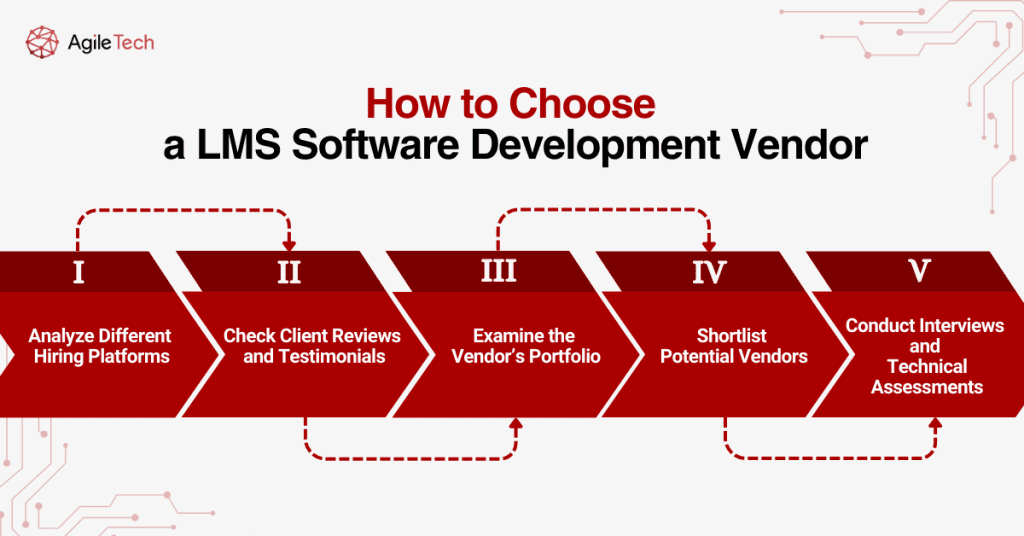
Analyze Different Hiring Platforms
To begin with, explore hiring platforms like Clutch, GoodFirms, and TechBehemoths. These platforms list outsourcing companies specializing in software development, including healthcare LMS providers. They provide essential details like company location, staff size, hourly rates, and areas of expertise.
Check Client Reviews and Testimonials
The platforms mentioned above often include customer reviews and testimonials. Pay attention to feedback from previous clients to understand the vendor’s reliability, communication style, and project success rate. This helps you form an initial impression and shortlist potential partners.
Examine the Vendor’s Portfolio
Study the vendor’s website and case studies. Look for experience in healthcare LMS systems or related healthcare software projects. A strong portfolio showcases expertise in LMS development and ensures they understand healthcare-specific compliance requirements.
Shortlist Potential Vendors
Rather than selecting one company immediately, create a list of potential LMS healthcare vendors. Compare their qualifications, pricing models, and feature offerings. Prepare a list of questions to ask during the interview phase.
Conduct Interviews and Technical Assessments
Start reaching out to vendors and setting up meetings. Ask about their experience, development process, security measures, and post-deployment support. Focus on:
- Compliance knowledge (e.g., HIPAA, GDPR)
- Customization capabilities
- Integration experience with healthcare IT systems
- Security protocols for data protection
Ensure the Vendor Provides:
- Technical support to launch and maintain your LMS effectively
- Scalable features to upgrade your system as training demands grow
- Advanced analytics for real-time data collection and performance tracking
- Multimedia support (e.g., video training, webinars, animation, quizzes)
Once you’ve chosen a vendor, the next step is to develop the best LMS for healthcare that aligns with your organization’s goals.
7. How to Build a Custom LMS Tailored to Your Healthcare Business
Developing a custom healthcare LMS is a strategic process that requires careful planning, collaboration, and execution. Unlike off-the-shelf solutions, a custom LMS is designed to address your organization’s unique challenges, workflows, and training goals. Here’s a detailed, step-by-step guide to help you create a tailored hospital training software solution:
7.1. Identify Requirements
The foundation of a successful healthcare LMS lies in clearly defining your organization’s requirements. This step ensures that the final product aligns with your training objectives and operational needs.
- Identify Key Training Needs: Start by understanding the types of training your organization requires. For example, do you need compliance training, clinical skills development, or patient safety education? Consider the specific roles within your organization, such as doctors, nurses, administrative staff, and technicians, and tailor the training accordingly.
- Compliance Requirements: Healthcare organizations must adhere to strict regulations like HIPAA, OSHA, and Joint Commission standards. Identify the compliance training modules needed and ensure the LMS can automate certification tracking and generate audit-ready reports.
- End-User Expectations: Engage with your end-users—healthcare professionals—to understand their preferences and pain points. For instance, do they prefer mobile-friendly platforms, bite-sized learning modules, or interactive content? Gathering this feedback ensures the LMS is user-centric and adoption-friendly.
7.2. Choose a Technology Stack
The technology stack you choose will determine the scalability, security, and performance of your healthcare LMS.
- Scalability: Healthcare organizations often grow over time, so your LMS must be able to scale seamlessly. Choose frameworks and tools that support a growing number of users, courses, and data.
- Security: Given the sensitive nature of healthcare data, security is non-negotiable. Opt for technologies that offer robust encryption, secure authentication, and compliance with data protection regulations like HIPAA and GDPR.
- Integration Capabilities: Ensure the technology stack supports integration with existing systems, such as HR platforms, hospital management systems, and electronic medical records (EMRs). This ensures seamless data exchange and reduces administrative overhead.
- Cloud vs. On-Premise: Decide whether a cloud-based or on-premise solution is better suited to your organization. Cloud-based LMS platforms offer flexibility and cost savings, while on-premise solutions provide greater control over data.
7.3. Design User Experience
A well-designed user experience (UX) is critical to the success of your healthcare LMS. Healthcare professionals are often pressed for time, so the platform must be intuitive, responsive, and easy to navigate.
- Intuitive Interface: Design a clean and clutter-free interface that prioritizes ease of use. Use clear labels, logical navigation paths, and visual cues to guide users.
- Responsive Design: Ensure the LMS is accessible across devices, including desktops, tablets, and smartphones. A responsive design allows healthcare professionals to access training materials anytime, anywhere.
- Role-Based Dashboards: Create personalized dashboards for different user roles. For example, administrators should have access to advanced reporting tools, while learners should see their progress, upcoming courses, and certifications.
- Accessibility: Ensure the LMS is accessible to all users, including those with disabilities. This includes features like screen reader compatibility, adjustable font sizes, and keyboard navigation.
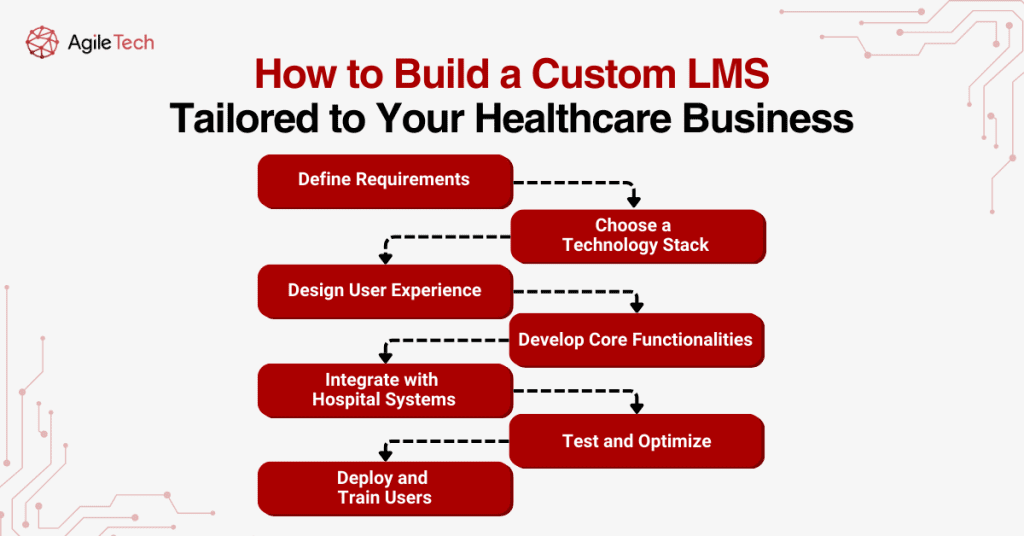
7.4. Develop Core Functionalities
The core functionalities of your healthcare LMS will determine its effectiveness in meeting your training goals. Focus on implementing must-have features that address the unique needs of healthcare organizations.
- Compliance Tracking: Automate the tracking of certifications and renewal deadlines. Send reminders to users and generate compliance reports for audits.
- Automated Reporting: Provide administrators with real-time insights into learner progress, course completion rates, and knowledge gaps. Advanced analytics tools can help identify trends and areas for improvement.
- Mobile Access: Develop a mobile-friendly LMS or a dedicated mobile app to allow healthcare professionals to learn on the go. Ensure offline access for users in areas with limited connectivity.
- Role-Based Training Paths: Create customized training paths for different roles within your organization. For example, nurses may require different training modules than administrative staff.
- Multilingual Support: If your organization has a diverse workforce, ensure the LMS supports multiple languages to make training accessible to all employees.
7.5. Integrate with Hospital Systems
Seamless integration with existing hospital systems is essential for maximizing the efficiency of your healthcare LMS.
- HR Platforms: Integrate the LMS with your HR system to automate user onboarding, role assignments, and performance tracking.
- Hospital Management Systems: Connect the LMS with hospital management systems to ensure data consistency and streamline administrative processes.
- Electronic Medical Records (EMRs): Integrate with EMRs to provide context-specific training. For example, if a new EMR feature is rolled out, the LMS can automatically assign relevant training modules to users.
7.6. Test and Optimize
Thorough testing is crucial to ensure your healthcare LMS functions as intended and delivers a seamless user experience.
- User Acceptance Testing (UAT): Involve end-users in the testing process to gather feedback on the platform’s usability, functionality, and performance. This helps identify any issues before the LMS goes live.
- Performance Testing: Test the LMS under different conditions to ensure it can handle a large number of users and data without compromising performance.
- Security Testing: Conduct rigorous security testing to identify and address vulnerabilities. This includes testing for data breaches, unauthorized access, and compliance with industry regulations.
- Optimization: Use the feedback gathered during testing to optimize the LMS. This may involve refining the user interface, improving load times, or adding new features.
7.7. Deploy and Train Users
The final step in building a custom healthcare LMS is deployment and user training. A smooth rollout ensures widespread adoption and maximizes the platform’s impact.
- Phased Deployment: Consider rolling out the LMS in phases to minimize disruptions. Start with a pilot group, gather feedback, and make necessary adjustments before expanding to the entire organization.
- Onboarding and Training: Provide comprehensive onboarding and training to ensure users are comfortable with the platform. This includes creating user guides, video tutorials, and hosting live training sessions.
- Ongoing Support: Offer continuous support to address any issues or questions that arise. This includes providing a dedicated helpdesk, regular updates, and user feedback sessions.
- Monitor and Improve: After deployment, monitor the LMS’s performance and gather feedback from users. Use this data to make ongoing improvements and ensure the platform continues to meet your organization’s needs.
By following these steps, you can build a custom healthcare LMS that is tailored to your organization’s unique needs and delivers measurable results. Whether you’re looking to improve compliance, enhance employee engagement, or streamline training processes, a well-designed LMS can transform your healthcare organization’s training initiatives.
8. Enhancing Hospital Training Software’s Efficiency with AgileTech
At AgileTech, we specialize in developing custom healthcare LMS systems that empower organizations to deliver effective and efficient training. Our solutions are designed to:
- Streamline compliance management.
- Enhance learner engagement.
- Integrate seamlessly with existing systems.
- Provide actionable insights through advanced analytics.
By partnering with AgileTech, you can create hospital training software that meets your organization’s unique needs and drives long-term success.
9. Conclusion
Implementing a healthcare LMS is a strategic investment that can transform your organization’s training processes, improve compliance, and enhance patient outcomes. By understanding the key features, benefits, and implementation steps, you can make informed decisions and choose the right platform for your needs.
Whether you opt for an off-the-shelf solution or a custom-built learning management system for healthcare, the right LMS will empower your workforce, streamline operations, and position your organization for success in an ever-evolving industry.