Patient Portal Software: Top Solutions for Modern Healthcare Management
Patient portal software has revolutionized healthcare delivery by creating seamless connections between providers and patients. These digital platforms offer secure access to medical records, appointment scheduling, and billing information while reducing administrative burdens for healthcare facilities. The best patient management software solutions combine user-friendly interfaces with powerful features that enhance patient engagement and operational efficiency.

1. What is a Patient Portal and Why Does It Matter?
Healthcare has undergone a significant digital transformation in recent years, with patient portal software leading the charge in modernizing provider-patient interactions. But what is this technology, and why has it become so important?
1.1. Understanding Patient Portal Software
A patient portal program is a secure online platform that gives patients 24/7 access to their personal health information. Think of it as a digital gateway that connects patients with their healthcare providers, allowing them to view test results, schedule appointments, request prescription refills, and communicate with their medical team—all from the comfort of their home or on the go via mobile devices.
Unlike traditional paper-based systems that require in-person interactions or phone calls during business hours, patient account software empowers individuals to manage their healthcare needs at their convenience. This self-service approach not only improves the patient experience but also reduces the administrative workload for healthcare staff.
1.2. Impressive Statistics on Patient Portal Adoption
The adoption of patient portal software has seen remarkable growth in recent years, with research backing its impact:
- According to the Office of the National Coordinator for Health Information Technology (ONC), approximately 38% of Americans were offered access to patient portals, with 58% of those offered access using their portal at least once (ONC Data Brief, 2020).
- A study published in the Journal of Medical Internet Research found that healthcare facilities implementing patient management software experienced a 25-33% reduction in phone calls related to appointment scheduling and prescription refills (Powell et al., 2018).
- Research in the Healthcare Financial Management Journal documented that medical practices using patient portal programs saw a 19.2% decrease in no-show rates, significantly improving operational efficiency (Mendoza et al., 2019).
- According to a survey by the Healthcare Information and Management Systems Society (HIMSS), 62% of patients reported that access to a healthcare portal improved their satisfaction with providers and increased their engagement in their care (HIMSS Patient Engagement Survey, 2021).
1.3. Key Benefits for Healthcare Providers and Patients
For healthcare providers, the best patient management software offers numerous advantages:
- Streamlined administrative processes: By automating routine tasks like appointment scheduling and prescription refills, staff can focus on more complex patient care activities.
- Reduced operational costs: Digital communication reduces paper usage, postage expenses, and phone-related costs.
- Improved clinical outcomes: When patients are more engaged with their healthcare, they tend to follow treatment plans more closely and manage chronic conditions more effectively.
- Enhanced revenue cycle management: Patient account software with integrated payment features reduces billing cycles and improves collection rates.
Patients benefit equally from patient portal software:
- Convenient access to health information: No more calling the doctor’s office or waiting for mailed results to learn about test outcomes.
- Greater involvement in care decisions: Easy access to health records empowers patients to participate more actively in their treatment planning.
- Improved communication with providers: Secure messaging features allow for non-urgent questions without the need for appointments.
- Better medication management: Prescription refill capabilities and medication history access help patients stay on track with their treatment regimens.
1.4. The Evolution of Modern Patient Portal Solutions
Today’s patient portal programs have evolved significantly from their early predecessors. Modern solutions are far more comprehensive and user-friendly:
- Early systems focused primarily on providing basic information access, while today’s platforms offer interactive features and integration with multiple healthcare services.
- Previous generations of patient management software often existed as standalone systems, whereas modern solutions seamlessly integrate with electronic health records (EHR) and other healthcare technologies.
- Contemporary patient account software incorporates mobile accessibility, allowing patients to manage their healthcare on smartphones and tablets.
- Advanced security protocols protect sensitive health information, addressing the privacy concerns that limited the adoption of earlier systems.
The transition from traditional healthcare management systems to digital patient portals reflects broader shifts in healthcare delivery toward greater transparency, patient empowerment, and operational efficiency.
Read more: Healthcare LMS Implementation: How to Create Hospital Training Software
2. Essential Features of the Best Patient Management Software
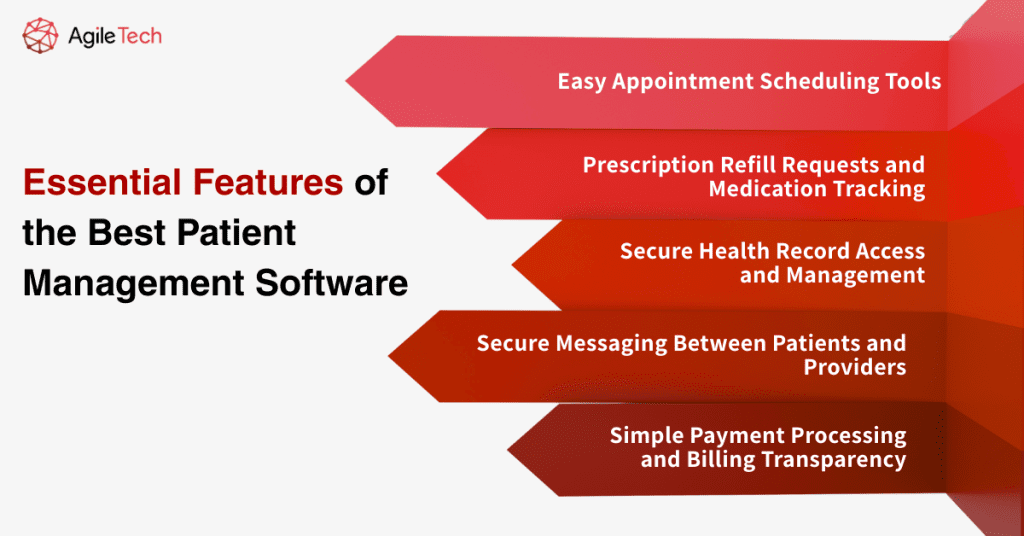
Secure Health Record Access and Management
Patient portal software is crucial for secure access to personal health information, including medical history, laboratory results, medication lists, and allergy records. It ensures patient safety by providing context and detailed information while implementing robust encryption, multi-factor authentication protocols, and audit trails to ensure HIPAA compliance.
These measures build trust with patients and satisfy regulatory requirements, allowing for confident sharing of sensitive health information between providers and patients. The best patient management software balances high-level security with user-friendly access, ensuring legitimate information use without creating barriers.
Easy Appointment Scheduling Tools
Patient portal software offers appointment management systems that improve patient interaction with healthcare facilities. It eliminates the need for phone calls during business hours, reducing front desk workload. Automated reminders reduce no-show rates and improve practice efficiency. Easy rescheduling options prevent appointment gaps. Waitlist capabilities for high-demand providers fill cancelled slots with patients interested in earlier appointments.
These features can result in up to 30% fewer missed appointments, cost savings, and improved care continuity. Efficiently managing appointment workflows is a key benefit of patient portal implementation.
Prescription Refill Requests and Medication Tracking
Patient portal software offers medication management features that streamline healthcare processes. Electronic prescription refill requests reduce errors and improve service speed. Automatic verification checks ensure requests meet refill criteria, saving time and maintaining medication controls. Notification systems alert patients when medications are ready for pickup, reducing trips to the pharmacy.
Comprehensive medication histories in patient account software help providers identify adherence patterns and potential interactions, providing patients with a complete view of their treatment regimen. Integrating prescription management into the patient portal ecosystem improves convenience and safety through accurate record-keeping.
Secure Messaging Between Patients and Providers
Effective communication is crucial for quality healthcare delivery. Patient management software should include robust messaging systems that extend the provider-patient relationship beyond office visits. This allows for non-urgent communication between appointments, reducing confusion and preventing medication errors.
Patient portal programs with messaging capabilities maintain a documented record of all exchanges, making them part of the permanent health record. Quality systems offer response time guarantees, typically within 24-48 hours for non-urgent matters. This structured approach reduces unnecessary office visits and phone calls, improving patient satisfaction and operational efficiency.
Simple Payment Processing and Billing Transparency
Patient account software with integrated billing features can help alleviate financial frustrations associated with healthcare services. It provides a clear presentation of charges, insurance coverage, and patient responsibility, reducing billing questions and disputes.
- Online payment options allow patients to settle balances at their convenience.
- Payment plan management tools in patient portal software make healthcare costs more manageable through structured installment arrangements.
- Integrated insurance verification capabilities confirm coverage before appointments, reducing surprise billing issues.
- Comprehensive patient portal programs can reduce billing-related inquiries by up to 40% and accelerate payment collection cycles, benefiting both providers and patients.
Read more: What is a Superbill in Medical Billing? How to Create a Superbill?
3. How Patient Portals Transform Healthcare
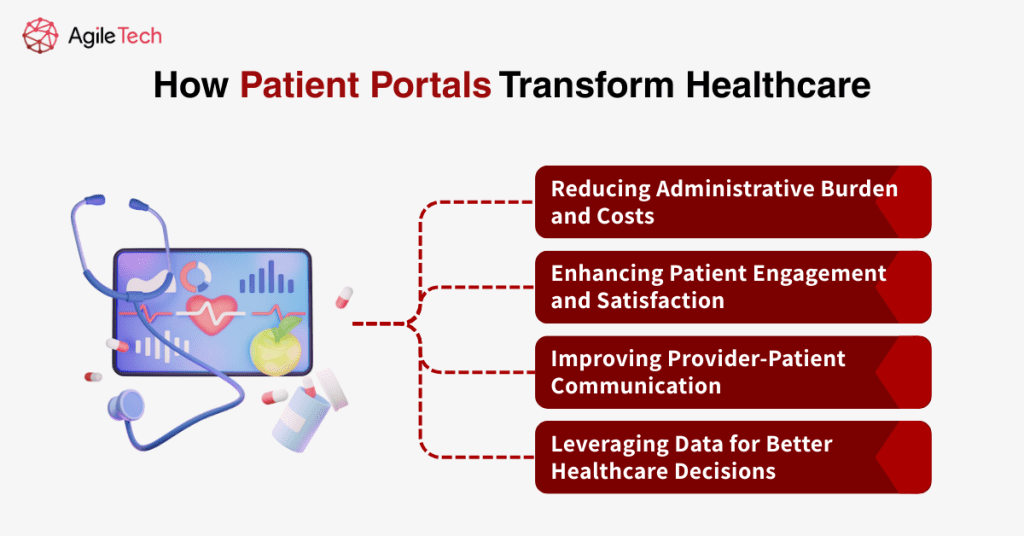
Reducing Administrative Burden and Costs
Healthcare facilities using patient portal software experience significant efficiency improvements, transforming administrative operations. Staff members spend less time on routine tasks like phone calls and paperwork, reallocating resources to more complex patient service activities. Digital document management capabilities reduce storage costs and improve information retrieval efficiency.
This results in a more streamlined, responsive administrative operation. Automated workflows eliminate redundant tasks and minimize human error in data entry and transcription. Self-service options through patient account software reduce staffing requirements for routine administrative functions, allowing facilities to optimize staffing models or redeploy personnel to higher-value activities. Comprehensive patient portal programs typically reduce administrative overhead by 15-20%, allowing for cost savings that can be redirected to clinical care initiatives or other strategic priorities.
Enhancing Patient Engagement and Satisfaction
Quality patient management software significantly impacts patient engagement with healthcare processes. Patients who regularly use portal systems report feeling more connected to their healthcare team, creating stronger therapeutic relationships that can improve treatment adherence and outcomes. This enhanced connection stems partly from greater information access, as patients with visibility into their personal health information develop increased understanding of their conditions and treatment plans.
Self-service capabilities within patient portal programs give patients a greater sense of control over their healthcare experience, addressing feelings of helplessness often associated with illness or injury. Regular digital interactions through appointment reminders, health maintenance alerts, and educational content keep healthcare needs top-of-mind, improving preventive care compliance and chronic condition management.
Healthcare organizations implementing robust patient portal software typically observe measurable improvements in patient experience metrics, with many reporting increases of 20-30% in satisfaction scores after full implementation and adoption.
Improving Provider-Patient Communication
Patient portal programs improve healthcare communication by enabling asynchronous messaging and digital channels between patients and providers. This flexibility is especially useful in complex schedules. Patient account software facilitates frequent touchpoints between appointments, allowing for treatment plan adjustments, question answering, and progress updates. Portal-based communication also enhances documentation, making every exchange part of the permanent health record, improving care continuity, and reducing information loss.
This comprehensive communication history provides context for care team members, especially in practices with multiple providers. Providers using robust patient portal software can manage larger patient panels more effectively while maintaining personal connections. This expanded capacity could potentially increase healthcare access without increasing clinical staff.
Leveraging Data for Better Healthcare Decisions
Modern patient portal software provides valuable data that can drive improvements in clinical outcomes and business operations. Analytics reveal usage patterns, identifying which services patients value most, allowing healthcare organizations to prioritize enhancements. This data complements communication analytics, identifying common questions and concerns, highlighting opportunities for proactive patient education.
Engagement metrics from patient account software reveal targeted outreach to inactive patients, improving individual health outcomes and population health metrics that impact reimbursement. Performance data collected through portal interactions enables continual refinement of the digital patient experience, creating a cycle of improvement based on actual usage.
Healthcare organizations use this comprehensive insight to guide strategic decisions about service offerings, staffing allocations, and quality improvement initiatives. The evolution from using portals as communication tools to leveraging them as strategic data assets represents the maturation of digital health engagement.
3.1. Connecting with Existing Systems
The value of patient portal software is significantly enhanced when it seamlessly integrates with other healthcare systems. This interoperability is critical for creating a cohesive digital ecosystem.
Seamless Electronic Health Record Integration
The most effective patient portal programs maintain bidirectional communication with electronic health record (EHR) systems:
- Data entered by patients through the portal flows directly into the clinical record
- Updates made by providers in the EHR appear in real-time in the patient’s portal view
- Integration eliminates duplicate data entry and reduces transcription errors
- Unified systems provide consistent information across all care settings
This deep integration ensures that both patients and providers work with the same up-to-date information, improving care coordination and decision-making.
Working with Other Software and Meeting Standards
Interoperability extends beyond EHR systems to encompass the broader healthcare technology environment:
- The best patient management software adheres to established data exchange standards like HL7 FHIR and API-based integration models
- Compatibility with practice management systems ensures consistent scheduling and billing processes
- Integration with laboratory information systems enables automatic delivery of test results
- Connectivity with pharmacy systems streamlines prescription management
- Compliance with HIPAA, GDPR, and other relevant regulations ensures data privacy and security
These interoperability standards allow different software components to function as a unified system, enhancing efficiency and information accuracy.
Connecting to Other Healthcare Applications
Modern healthcare relies on an ecosystem of specialized applications, and patient account software often serves as a central hub connecting these various tools:
- Telehealth platforms integrate with portals to provide seamless virtual care experiences
- Remote monitoring devices sync data directly to patient records through portal interfaces
- Wellness applications share relevant health metrics with clinical systems
- Third-party scheduling tools coordinate with portal calendars
This connected approach creates a more comprehensive view of patient health and simplifies the digital experience for both patients and providers.
Moving Data Safely Between Systems
Data migration and ongoing information exchange require careful attention to security and integrity:
- Robust authentication mechanisms verify user identity before allowing access
- Encryption protects data both at rest and in transit between systems
- Detailed audit trails track all data access and modifications
- Backup systems prevent information loss during system transitions
Patient portal software that excels in these areas builds trust with both healthcare organizations and patients, encouraging adoption and sustained engagement.
3.2. Advanced Features in Modern Portals
As patient portal technology matures, leading solutions are incorporating increasingly sophisticated features that further enhance the healthcare experience.
Mobile Access and Responsive Design
Today’s patients expect anywhere, anytime access to their health information:
- Mobile-optimized patient portal programs provide full functionality on smartphones and tablets
- Native apps offer enhanced features like biometric authentication and push notifications
- Responsive design ensures a consistent experience across all device types
- Offline capabilities allow access to critical information even without internet connectivity
With over 80% of Americans owning smartphones, mobile-friendly patient account software has become essential for widespread adoption and regular engagement.
Virtual Visit Capabilities
The integration of telehealth features within patient portals creates seamless virtual care experiences:
- Video consultation capabilities are embedded directly in the portal environment
- Scheduling, payment, and documentation are all handled within a single system
- Pre-visit questionnaires and post-visit summaries enhance the telehealth workflow
- Virtual waiting rooms improve the patient experience
The best patient management software solutions now treat virtual visits as a core component rather than a separate service, reflecting the growing importance of telehealth in modern care delivery.
Automated Reminders and Follow-ups
Intelligent automation within patient portal software improves care continuity:
- Appointment reminders delivered via the patient’s preferred communication channel
- Preventive care alerts based on age, gender, and medical history
- Medication adherence checks and refill reminders
- Follow-up prompts after procedures or significant health events
These automated features extend the impact of healthcare teams without requiring additional staffing, improving both operational efficiency and clinical outcomes.
Personalized Health Resources
Leading patient portal programs now include educational components tailored to individual needs:
- Condition-specific information is recommended based on the patient’s diagnoses
- Instructional videos explaining common procedures or home care techniques
- Interactive tools for tracking health metrics relevant to personal care plans
- Lifestyle recommendations aligned with treatment goals
This personalized education enhances patients’ understanding of their health conditions and increases engagement with treatment plans.
Tools to Keep Patients Engaged
Sustained engagement represents one of the greatest challenges in patient portal adoption. Advanced systems address this through:
- Gamification elements that reward regular interaction and healthy behaviors
- Preference settings that allow patients to customize their portal experience
- Social features that enable family involvement in care coordination
- Feedback mechanisms that give patients a voice in improving the system
Patient account software with these engagement features typically sees higher utilization rates and greater long-term impact on health outcomes.
4. Building a Custom Patient Portal
While many healthcare organizations opt for commercial patient portal software, others choose to develop custom solutions tailored to their specific needs. This approach offers greater control but requires careful planning and execution.
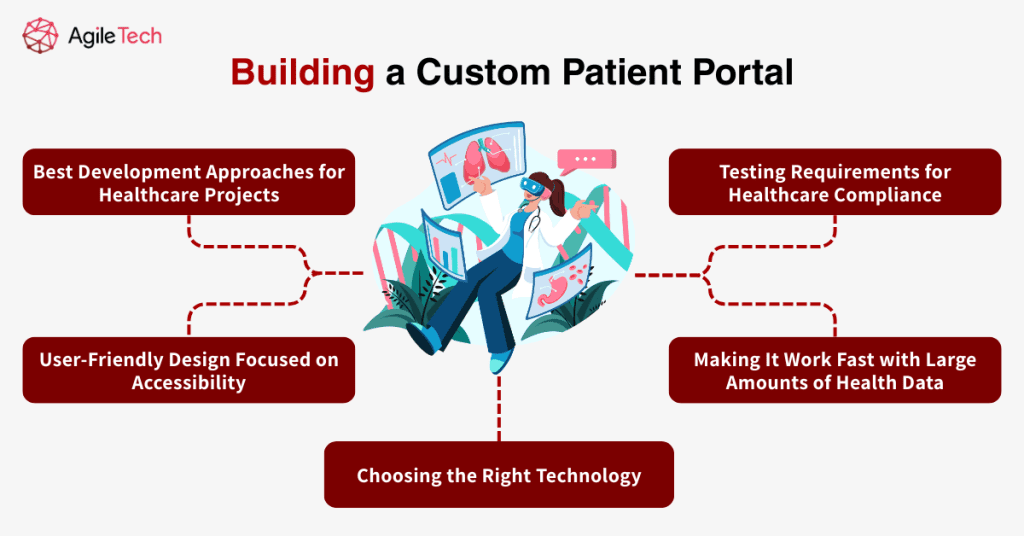
Choosing the Right Technology
The technical foundation of a patient portal program significantly impacts its performance, scalability, and security:
- Backend technologies must handle high transaction volumes while maintaining HIPAA compliance
- Database design needs to accommodate complex medical data relationships and support efficient queries
- Frontend frameworks should enable intuitive user experiences across all devices
- API architecture must facilitate integration with existing healthcare systems
Technology selection depends on the organization’s specific requirements, existing infrastructure, and long-term digital strategy.
Best Development Approaches for Healthcare Projects
Healthcare software development requires specialized methodologies that address the unique challenges of the industry:
- Agile development practices with regular stakeholder input ensure the final product meets actual user needs
- User-centered design approaches that involve both patients and providers in the creation process
- Incremental implementation strategies that allow for testing and refinement before full deployment
- Comprehensive documentation that supports regulatory compliance and future maintenance
Organizations developing custom patient account software often partner with healthcare-specialized development firms that understand these industry-specific considerations.
User-Friendly Design Focused on Accessibility
Usability directly impacts adoption rates for patient portal software:
- Clean, intuitive interfaces reduce the learning curve for all users
- Accessibility features ensure that patients with disabilities can effectively use the system
- Multi-language support addresses the needs of diverse patient populations
- Simplified workflows minimize the steps required to complete common tasks
The best patient management software prioritizes user experience without compromising functionality, recognizing that even the most feature-rich system provides limited value if patients struggle to use it.
Testing Requirements for Healthcare Compliance
Thorough testing is critical for patient portal programs, given the sensitivity of health information and the regulatory environment:
- Security testing identifies and addresses potential vulnerabilities
- Performance testing ensures the system can handle peak usage periods
- Compliance verification confirms adherence to HIPAA, ADA, and other relevant regulations
- User acceptance testing validates that the system meets the needs of both patients and providers
Rigorous testing protocols reduce implementation risks and build confidence in the reliability of the custom solution.
Making It Work Fast with Large Amounts of Health Data
Performance optimization ensures a positive user experience even as data volumes grow:
- Efficient database queries minimize response times for information retrieval
- Caching strategies reduce load on backend systems during peak usage periods
- Asynchronous processing handles resource-intensive operations without affecting user interactions
- Scalable architecture accommodates growing patient populations and expanding feature sets
Attention to performance from the earliest stages of development prevents the degradation of user experience that often occurs as patient portal software matures and data accumulates.
5. Steps to Launch Your Patient Portal
Successful implementation of patient portal software requires a structured approach that addresses both technical requirements and organizational change management.
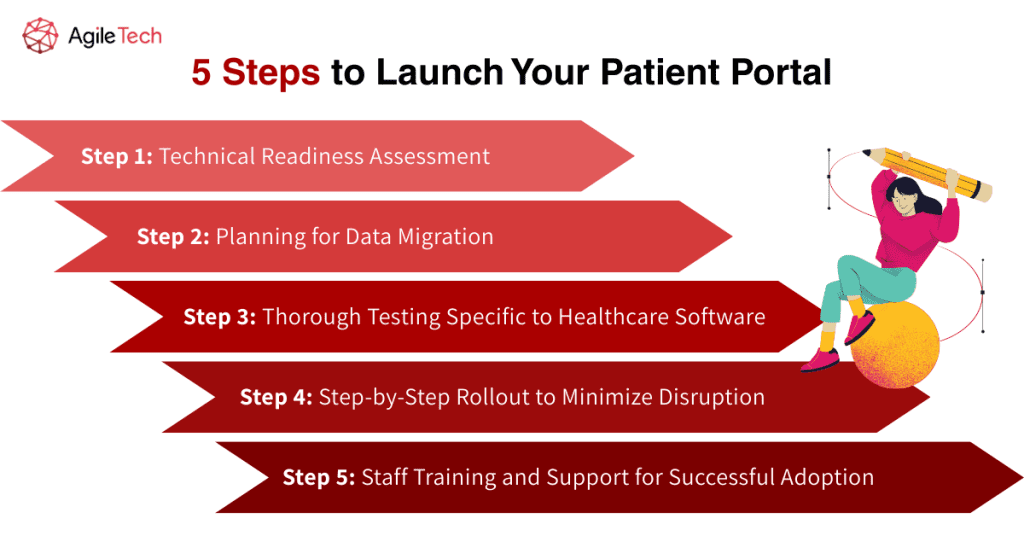
Step 1: Technical Readiness Assessment
Before implementing a patient portal program, healthcare organizations should evaluate their existing infrastructure:
- Hardware capacity and scalability to support increased digital interactions
- Network bandwidth and reliability to ensure consistent access
- Security systems and protocols to protect sensitive health information
- Integration capabilities with existing clinical and administrative systems
This assessment identifies potential barriers to successful implementation and informs resource allocation for the project.
Step 2: Planning for Data Migration
Transitioning from legacy systems requires careful data handling:
- Comprehensive inventory of all data to be migrated to the patient account software
- Data cleaning processes to identify and correct inaccuracies before transfer
- Mapping strategies to align legacy data structures with the new system’s architecture
- Validation protocols to ensure complete and accurate migration
Effective data migration planning minimizes disruption during the transition and ensures historical information remains accessible in the new environment.
Step 3: Thorough Testing Specific to Healthcare Software
Beyond standard quality assurance, patient portal software requires specialized testing:
- Scenario-based testing that simulates actual patient and provider workflows
- Integration testing across all connected healthcare systems
- Security and privacy assessments that validate HIPAA compliance
- Load testing to ensure performance under varying usage conditions
Comprehensive testing identifies potential issues before they affect users, building confidence in the new system among both staff and patients.
Step 4: Step-by-Step Rollout to Minimize Disruption
A phased implementation approach reduces risks and allows for adjustment:
- Pilot testing with a limited user group to identify operational challenges
- Sequential feature releases to prevent overwhelming users with too much change
- Graduated patient onboarding to manage support requirements
- Overlapping operation of legacy and new systems during transition periods
This measured approach to deploying patient portal software allows organizations to learn and adapt throughout the implementation process.
Step 5: Staff Training and Support for Successful Adoption
The human element is crucial for successful patient portal implementation:
- Comprehensive training programs tailored to different staff roles
- Change management strategies to address resistance and build enthusiasm
- Technical support resources for both staff and patients
- Champions within each department who promote portal adoption
Organizations that invest in these human factors typically see faster adoption and more effective utilization of their patient management software.
Read more: 6-Step Guide to Healthcare Mobile App Development for Businesses
6. The Cost of Patient Portal Software Development
Understanding the financial aspects of patient portal implementation helps organizations make informed decisions and secure appropriate resources.
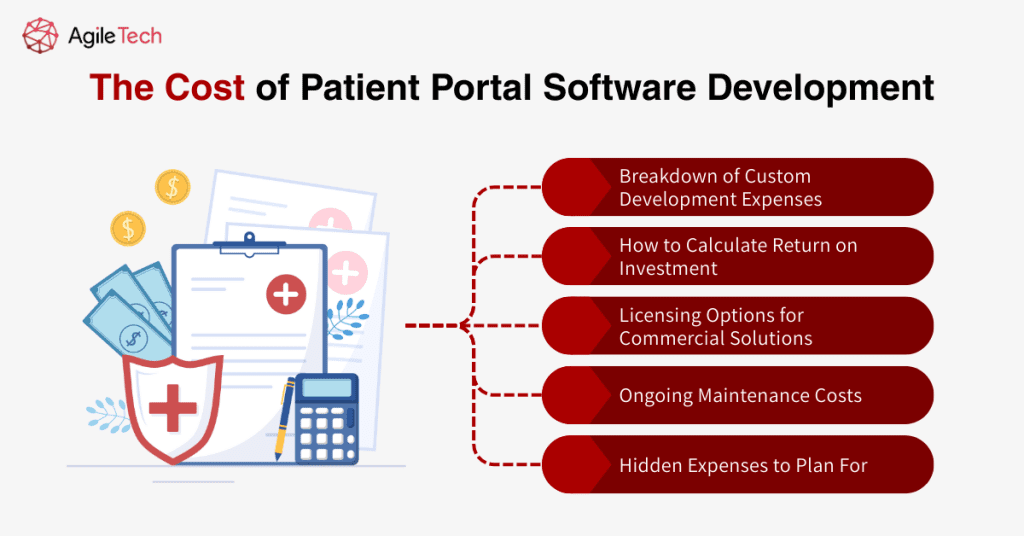
Breakdown of Custom Development Expenses
Custom patient portal software development involves several cost categories:
- Design and development labor, typically the largest expense
- Integration services to connect with existing healthcare systems
- Quality assurance and testing
- Project management and oversight
- Infrastructure and hosting requirements
- Compliance and security implementations
Depending on complexity and scope, custom development costs for comprehensive patient account software can range from $100,000 to over $1 million.
How to Calculate Return on Investment
Evaluating ROI for patient portal programs requires consideration of both tangible and intangible benefits:
- Direct cost savings from reduced administrative workload
- Revenue improvements through decreased no-show rates and more efficient billing
- Operational efficiencies that allow staff reallocation to higher-value activities
- Patient retention value resulting from improved satisfaction
- Quality metric improvements that may affect reimbursement rates
Healthcare organizations typically see positive ROI within 12-24 months of full implementation when all these factors are considered.
Licensing Options for Commercial Solutions
For organizations that prefer pre-built solutions, various licensing models exist:
- Subscription-based pricing, often charged per provider or patient
- Tiered feature packages that allow scaling of capabilities as needs evolve
- One-time purchase options with annual maintenance fees
- Usage-based models tied to actual system utilization
Commercial patient portal software options typically range from $200-$500 per provider per month, with enterprise pricing available for larger organizations.
Ongoing Maintenance Costs
The total cost of ownership extends beyond initial implementation:
- Regular updates and feature enhancements
- Technical support for staff and patients
- System monitoring and performance optimization
- Security audits and compliance verification
- Training for new staff members
Organizations should budget 15-20% of initial implementation costs annually for ongoing maintenance of their patient management software.
Hidden Expenses to Plan For
Several less-obvious costs can impact the overall budget:
- Data migration complexities that exceed initial estimates
- Staff overtime during implementation periods
- Temporary productivity decreases during transition phases
- Enhanced network security requirements
- Patient education materials and onboarding campaigns
Comprehensive budgeting that accounts for these factors helps prevent financial surprises during the implementation process.
Read more: Hospital Management System: Top Choices, Costs & Development Steps
7. Future Trends in Patient Portals
The evolution of patient portal software continues, with several emerging technologies poised to further transform healthcare delivery.
AI and Machine Learning in Healthcare Management
Artificial intelligence is enhancing patient portal capabilities:
- Chatbots that provide immediate responses to common patient questions
- Predictive analytics that identify patients at risk for specific conditions
- Smart scheduling systems that optimize appointment allocation
- Natural language processing that extracts insights from unstructured patient communications
As these technologies mature, patient account software will increasingly serve not just as an information conduit but as an intelligent assistant in healthcare management.
Better Connectivity Between Different Systems
Interoperability continues to advance, creating more seamless healthcare experiences:
- Unified patient identifiers that facilitate information sharing across care settings
- Standardized APIs that simplify the integration of new applications
- Consent management frameworks that give patients greater control over their data
- Regional health information exchanges that connect disparate healthcare organizations
These improvements will allow patient portal programs to present increasingly comprehensive views of an individual’s health information regardless of where care is received.
Including Patient-Generated Health Data
Consumer health technologies are creating new data streams that complement traditional clinical information:
- Wearable device integration that captures activity, sleep, and vital sign data
- Home monitoring equipment that tracks chronic condition metrics
- Patient-reported outcome measures that document subjective health experiences
- Environmental and social information that provides context for clinical findings
The best patient management software will increasingly incorporate these diverse data sources to create more holistic health profiles.
Blockchain for Enhanced Security
Distributed ledger technology offers promising applications in healthcare data management:
- Immutable audit trails that enhance accountability for information access
- Patient-controlled consent mechanisms that improve privacy protection
- Verified data provenance that builds trust in health information exchanges
- Smart contracts that automate complex healthcare transactions
Though still emerging, blockchain implementations may address some of the most persistent challenges in healthcare data security and patient privacy.
Predictive Tools for Personalized Care
Advanced analytics are enabling more proactive healthcare approaches:
- Risk stratification models that identify patients needing additional support
- Personalized health maintenance recommendations based on individual profiles
- Early warning systems for condition exacerbation
- Treatment response predictions that inform clinical decision-making
These capabilities transform patient portal software from retrospective information repositories to forward-looking tools for health optimization.
8. Conclusion
Patient portal software has transformed from simple information access tools to comprehensive platforms that enhance healthcare delivery on multiple fronts. The best patient management software solutions combine user-friendly interfaces with robust security, seamless integration capabilities, and features that actively engage patients in their care journey. As healthcare continues to evolve, organizations that strategically implement patient account software will gain significant advantages, reducing administrative costs, improving clinical outcomes, enhancing patient satisfaction, and positioning themselves for success in an increasingly digital healthcare landscape.